11 October 2026 · By Hadi Ataei
Liquid AI d1: AI Models That Decide Instead of Writing
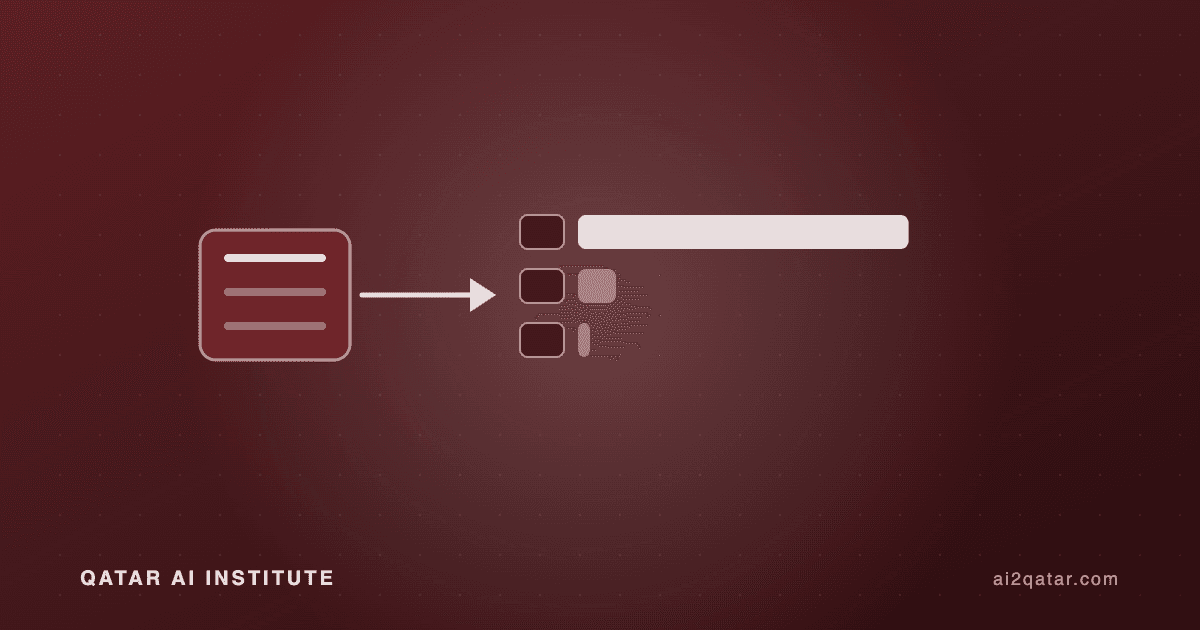
Most AI models you have used write text. On 5 and 7 October 2026, Liquid AI introduced a different kind: d1, a family of "decision models" that never write anything. They read an input and a question, and return a probability for each possible answer, all in a single forward pass. The company released a hosted version on 5 October and, two days later, open-weight versions small enough to run on edge devices. It is a good example of an idea worth understanding: not every AI task needs a chatbot.
What was announced
- d1 (5 October): a hosted "decision model" with vision, available through Liquid AI's API. Liquid AI describes it as a system for answering structured questions about unstructured data, such as a support ticket, an image or a form. It reads the input "in one forward pass, and returns the probabilities, without generating any tokens".
- Open d1 (7 October): two open-weight models on Hugging Face: d1-3B (text and image) and d1-omni-600M (text plus image or audio, with audio listed as experimental). They are available in formats that run with llama.cpp, and Liquid AI says they run on NVIDIA, Apple, AMD and Qualcomm hardware.
- Question types: yes/no questions with a probability, choosing one label from several with a probability for each, and a score weighted by probability.
What is a decision model?
A chat model such as ChatGPT generates a reply one token at a time, running the whole network once per token. If you only need to know "is this ticket urgent?", that is wasteful, and you then have to parse a text reply to extract a yes or no. A decision model skips the writing. It scores the candidate answers directly and returns their probabilities.
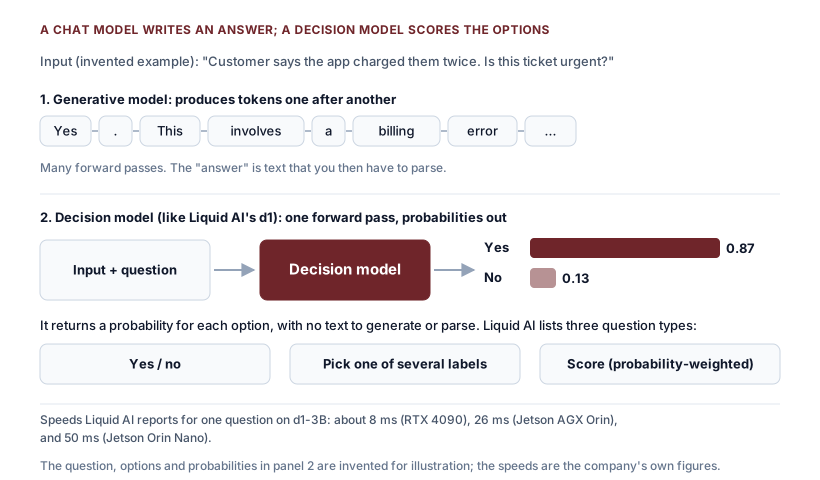
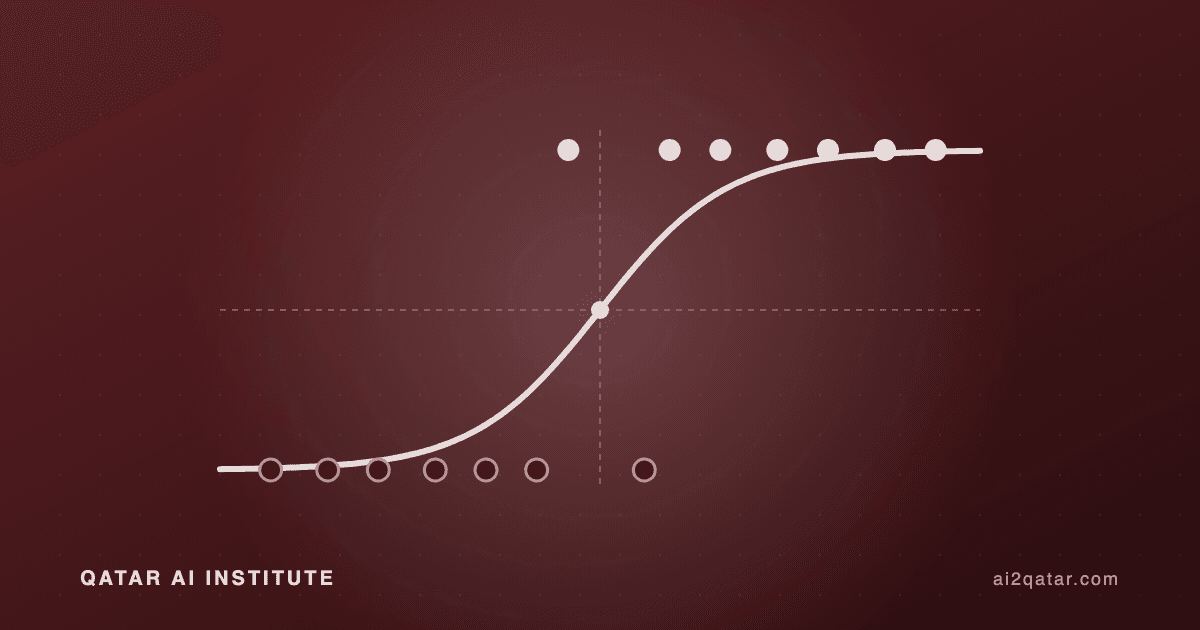
Conceptually this is a classifier. The model's internal scores for each option are converted to probabilities, which is exactly the job of the sigmoid (for yes/no) and the softmax (for several labels) that we explain in Sigmoid, Softmax and Logistic Regression. Liquid AI's description does not spell out its internal mechanism, so treat that link as background rather than a description of d1's exact design. What the company does say is that the output is probabilities, with no text generated.
The models and the numbers Liquid AI reports
- d1-3B: 3 billion parameters, text and image, built on the company's LFM2.5-VL-3B decoder-only model, trained by averaging several fine-tuned checkpoints.
- d1-omni-600M: 600 million parameters, built on a 350-million-parameter bidirectional encoder (the same family of design as BERT), with separate vision and audio encoders attached through lightweight LoRA adapters.
- Accuracy: on a set of seven text benchmarks, d1-3B averaged 82.9 and d1-omni-600M averaged 78.4, ahead of comparison models the company names (Decider 4B at 81.1 and Decider 2B at 77.1).
- Hosted d1 versus large chat models: Liquid AI says the hosted d1 matches or beats GPT-6.1 Sol on four of six real-world applications it tested, at 19 to 200 times lower cost, with text decisions in roughly 200 to 300 milliseconds. Its API price is listed at $0.04 per million input tokens, with only the input billed.
- Speed on devices (d1-3B, one question): about 8 ms on an RTX 4090, 26 ms on a Jetson AGX Orin and 50 ms on a Jetson Orin Nano.
- Intended uses: real-time structured decisions on devices, such as robotics, content moderation, gesture recognition, medical question answering, intent classification and toxicity detection.
How to read these claims
- These are the vendor's own benchmarks. The six applications, the comparison models and the cost calculation were chosen by Liquid AI. Independent evaluation on your own data is what counts.
- A decision model is not a chatbot. It can only answer the structured questions it was built for. It will not explain its reasoning in words, so for high-stakes decisions you still need monitoring, calibration checks and human review. (Our article on why AI models behave like black boxes covers why that matters.)
- Check the licence. The weights are public on Hugging Face, but read each model card for the exact licence terms before commercial use.
Why it matters
- Right-sized AI. Many production tasks are classification in disguise: routing a ticket, flagging a photo, filtering a message. A small model that returns a probability in milliseconds can be cheaper and faster than prompting a large chat model, and the same idea underlies the routing papers we have covered, such as TokenRouter.
- Edge deployment. Running on a laptop, phone or robot means data can stay on the device, which matters for privacy-sensitive uses.
- Probabilities, not just labels. A probability lets you set your own threshold, for example "escalate only if urgent is above 0.8", and tune the trade-off between missed cases and false alarms.
What it means if you are learning AI
This is a reminder that the basics still matter: a classifier outputs scores, a sigmoid or softmax turns them into probabilities, and a threshold turns probabilities into decisions. See What Is Logistic Regression? for the foundation, and our Introduction to Artificial Intelligence course for the wider picture.
What to watch next
- Independent benchmarks, including on Arabic text, which is worth testing before relying on any of these models in the region.
- How well the probabilities are calibrated: does "0.87" really mean right 87% of the time?
- Whether other labs release similar single-pass decision models, and how developers combine them with chat models.
Sources: Liquid AI, "Introducing d1: The most capable decision model, now with vision" (5 October 2026) and "Open d1: Edge decision models for text, vision, and audio" (7 October 2026); the Liquid AI page on Hugging Face. This is an independent explainer based on the company's announcements; figures are the company's own.